New Mexico Diabetes Advisory Council

Working to reduce the burden of diabetes on communities in New Mexico.


The Chronic Disease Prevention Council

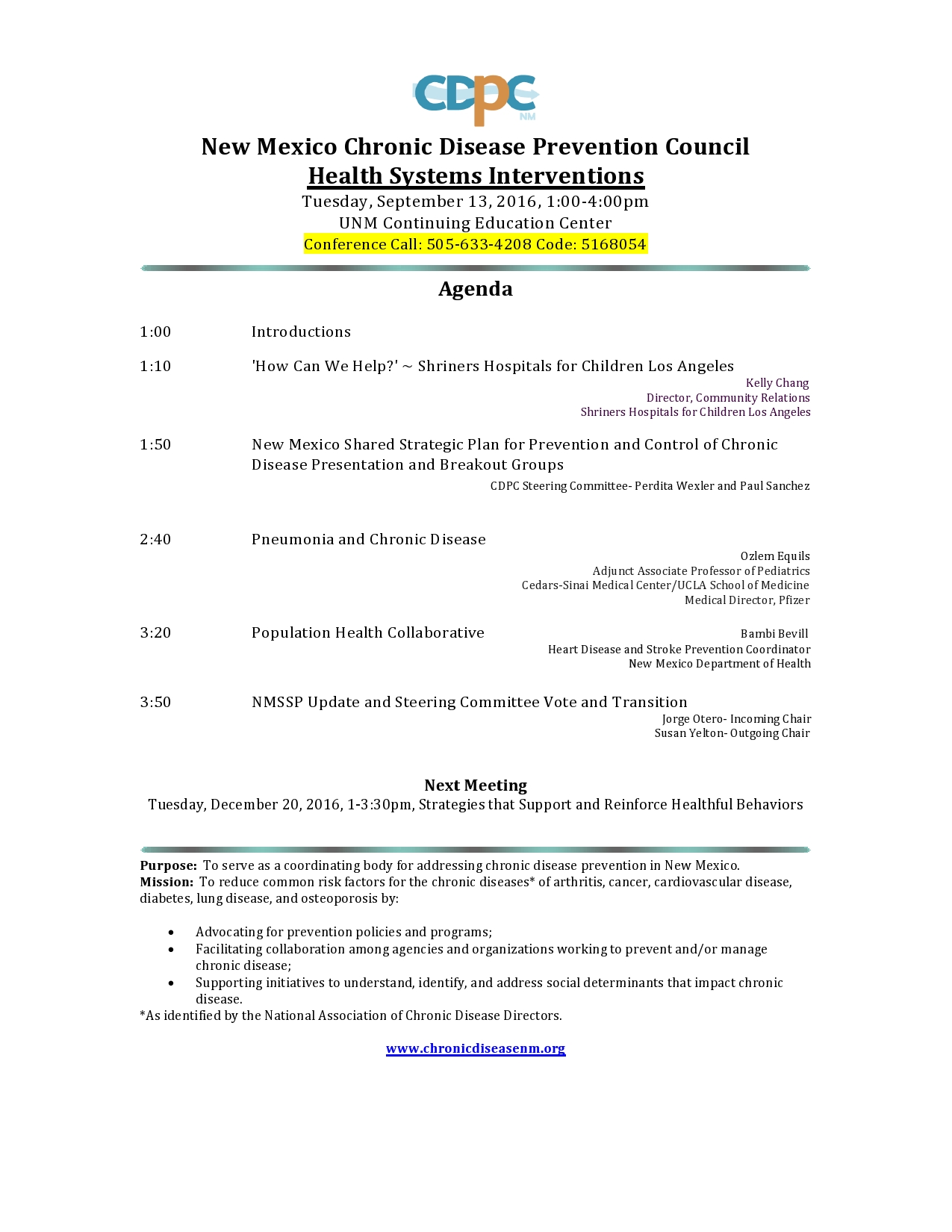
The Chronic Disease Prevention Council, with which the DAC has a close working relationship, has its quarterly meeting next week.  All who are interested are invited to attend.  In addition, please share this information with others in your networks who may be interested.

The meeting will focus on Health Systems Interventions and will take place on Tuesday, September 13, 1:00-4:00 pm, at the UNM Continuing Education Center in Albuquerque.  (Location: 1634 University Blvd NE, Albuquerque, NM 87131)

Conference calling is also available by dialing 505-633-4208 and entering code 5168054.

quarterly-meeting-8-13-16-page0001


Mark your calendar for 2016’s educational sessions

Screen shot 2016-02-05 at 4.04.21 PMEvery year, NMDAC coordinates a series of professional development sessions with a diabetes focus.

Our programs not only provide continuing education on diabetes-related topics, but each meeting also offers the opportunity for mentoring, camaraderie and information sharing among healthcare professionals who are making a difference in the lives of those with diabetes.

Below are the tentative dates and topics for NMDAC’s 2016 educational sessions to be held in Albuquerque:

  • Friday, April 1
    Spring into Better Health!
  • Friday, June 3
    Diabetes & Other Associated Chronic Diseases
  • Friday, September 9
    A Generational Look at Diabetes
  • Friday, December 2
    Behavior Struggles and Diabetes

>> Download the NMDAC 2016 Info flyer and share with your friends and colleagues >>


New Mexico-based groups join to raise awareness for National Diabetes Month

November is National Diabetes Month and November 14 is World Diabetes Day – a day observed across the world each year to help people learn about diabetes and prediabetes. The American Diabetes Association (ADA), together with the New Mexico Diabetes Advisory Council (NMDAC), urge New Mexicans to know the signs and see their doctor if they think they have diabetes, and if they already have it, know what to do to take care of themselves.

Anyone feeling extra thirsty and tired, and have to use the bathroom many times during the day and night should see their doctor right away to talk about these symptoms.   Untreated diabetes can result in blindness, kidney disease with dialysis, amputations, and can even lead to death.

The New Mexico Department of Health (DOH) reports that more than 200,000 people in the state have diabetes, and 21 percent don’t even know they have it. An additional 120,000 have prediabetes, which is when a person’s blood sugar is higher than normal, but not high enough to be true diabetes. Prediabetes can lead to diabetes, but with treatment, blood sugar can return to normal and prevent real diabetes.

Preventing diabetes is part of the mission of the International Diabetes Federation — creator of the annual World Diabetes Day on November 14.   This year’s campaign is “Nourishing development: Halting the diabetes epidemic through healthy eating.” Eating a healthier diet and losing five to seven percent of body weight along with exercise, can help reverse prediabetes – and prevent the onset of diabetes.

Local Diabetes Educators Can Help

For people who already have diabetes, working with a diabetes educator is a good way of lowering the chances of becoming blind, having kidney or nerve disease, or having a stroke or heart attack. Diabetes Educators are experts in helping people with diabetes understand how to make healthy choices that keep blood sugar levels in check, which is so important to taking care of diabetes. Most insurance plans cover a visit to a diabetes educator or dietitian with a referral from the primary care doctor.

“Many people struggling with diabetes don’t know about all the great education and support available right here in New Mexico” said Linda Reineke, RD, LD, CDE, chair of NMDAC. “Diabetes educators across New Mexico can provide ongoing guidance on lifestyle and diet to take control of their diabetes, and prevent serious complications later in life.”

People of any age can get diabetes and November is the perfect time for people to talk to their educator or make an appointment with an educator to learn more. Information on risk factors, prevention, and taking care of diabetes are all available at the ADA website, http://www.diabetes.org. Family members can visit the website and urge their relatives and friends to visit their doctor and ask for a test or a referral to a diabetes educator. This step can save lives.

Dec 4 Training :: Food for Life

HOW HEALTHY FOOD CHOICES CAN HELP PREVENT TYPE 2 DIABETES

Friday, December 4, 2015
Institute for American Indian Arts, Center for Lifelong Education
Santa Fe
View FINAL Agenda

During this interactive educational session, which included a cooking demonstration and tasting, participants learned “How Healthy Food Choices Can Help Prevent Type 2 Diabetes.”

In addition to recognizing how food marketing and labeling affects our food choices, participants learned to apply practices that incorporate Native American knowledge about traditional foods, agricultural practices, wild food harvesting techniques, and using food as medicine. Our presenters included:


2015 Survey Results Posted

What did NMDAC members & stakeholders have to say about the organization?

NMDAC recently conducted an online survey with the goal of gathering your thoughts, opinions, and ideas on trainings and activities. We put together a report that shows what survey respondents think NMDAC can do to improve its education and outreach efforts.

The NMDAC 2015 Survey Report (pdf) provides information about what types of professionals typically attend meetings and from where in the state they work. By reading the report, you’ll also learn what training topics are of most interest and what are our most important strategic goals.

One survey respondent said, “Trainings offered of NMDAC provided updated information to our organizations. It provides tremendous insight on Diabetes.” Do you agree? Read more about what others are saying>>

If you have additional recommendations, we’re always listening. Send your thoughts and ideas to newmexicodac@gmail.com.


Sept 11: What’s New in Diabetes Medications & Treatments?

WHAT’S NEW IN DIABETES MEDICATIONS & TREATMENTS
Friday, September 11, 2015
New Mexico Carpenters Union Training Center, Albuquerque
View FINAL Agenda

Join us to learn about the latest in medications, treatments, and tools to help patients with diabetes become more familiar with their health management options.

PRESENTERS:


Game Plan for Preventing Type 2 Diabetes: A Toolkit for Health Care Professionals

The National Diabetes Education Program (NDEP) has updated its popular GAME PLAN toolkit to help health care professionals identify, counsel, and support patients at risk for type 2 diabetes.

The online toolkit, GAME PLAN for Preventing Type 2 Diabetes: A Toolkit for Health Care Professionals and Teams, applies lessons learned from the landmark Diabetes Prevention Program (DPP), a major National Institutes of Health (NIH)-sponsored research study showing that it is possible to prevent or delay the onset of type 2 diabetes in patients at risk for diabetes.

The GAME PLAN toolkit empowers health care professionals in both clinical and community settings by providing them with information they need to identify prediabetes and facilitate effective interventions with their patients. The GAME PLAN toolkit features prediabetes screening information, strategies for talking to patients about prediabetes, and multiple tools and resources to help patients make lifestyle changes to prevent or delay the onset of type 2 diabetes.

To learn more about this toolkit, visit www.YourDiabetesInfo.org/GAMEPLAN.

INFORMATION FOR PATIENTS >>


June 5 Training :: Diabetic Gastroparesis

DIABETIC GASTROPARESIS: PATHOPHYSIOLOGY, DIAGNOSIS AND TREATMENTS 
Friday, June 5, 2015
New Mexico Carpenters Union Training Center
Agenda

During this session attendees will learn more about gastroparesis, a disorder affecting people with both type 1 and type 2 diabetes in which the stomach takes too long to empty its contents … it’s really a pain in the gut! 

Gastroparesis can make diabetes worse by making it more difficult to manage blood glucose. Our presenters will help you to identify treatment options, including blood sugar management, insulin adjustments, diet, medications, and gastric electric stimulation.

PRESENTERS 


April 10 Training :: Programs That Work to Prevent & Manage Diabetes

GROWING IN THE RIGHT DIRECTION
Friday, April 10, 2015
New Mexico Carpenters Training Center
Agenda

The New Mexico Department of Health’s Diabetes Prevention and Control Program led this training session focused on identifying opportunities that promote and deliver the evidence-based programs: the National Diabetes Prevention Program, the Chronic Disease Self-Management Program/MyCD, and the Diabetes Self-Management Program

PRESENTATIONS & TRAINING MATERIALS

National Diabetes Prevention Program (NDPP)

MyCD/DSMP


2015 Schedule Announced :: Mark your calendar

Every year, NMDAC coordinates a series of professional development sessions with a diabetes focus. Our programs not only provide continuing education on diabetes-related topics, but each meeting also offers the opportunity for mentoring, camaraderie and information sharing among healthcare professionals who are making a difference in the lives of those with diabetes.

By becoming a member you receive numerous benefits, one of which is FREE admission to each of the trainings.  Learn more about NMDAC membership … 

Below are the tentative dates for NMDAC’s 2015 educational sessions to be held in Albuquerque:

  • Friday, April 10
    Growing in the Right Direction: Programs that work to prevent and manage diabetes
  • Friday, June 5
    Proposed topic: Diabetic Gastroparesis
  • Friday, September 11
    Proposed topic: New diabetes medications 
  • Friday, December 4
    Proposed topic: Power Plate